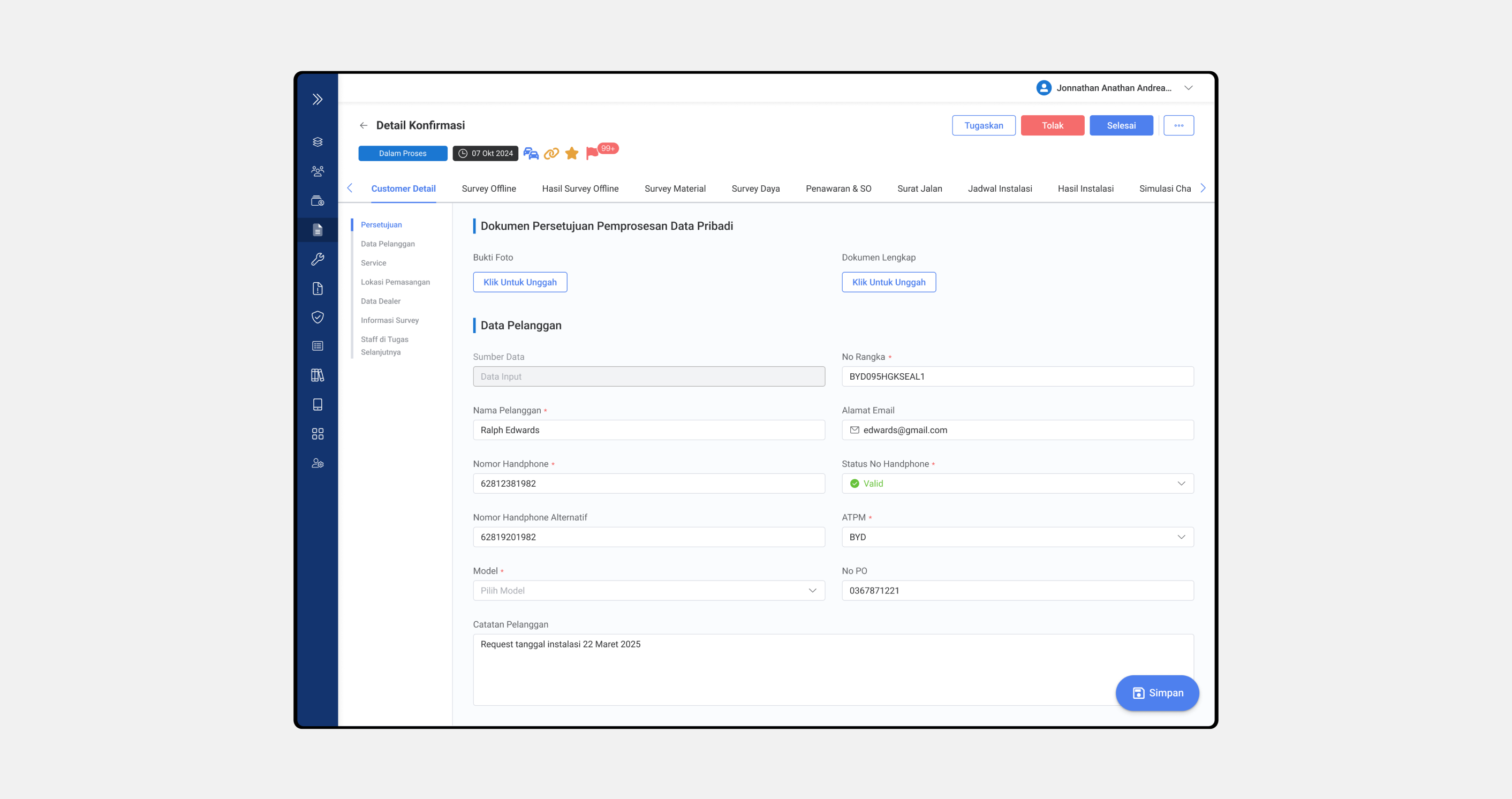
member.id — Designing a layout that improves efficiency and business
Our client supplies EV chargers for electric cars and has been a pioneer in Indonesia since 2019. But, their system wasn’t helping their users to complete the task and hard to use. The form experience was cluttered, overwhelming, and difficult for users to find and complete their job. With too many sections, scattered data, and crowded screens, users struggled to focus and navigate the process efficiently
The goal of the redesign was clear: to simplify the form experience by organizing information more intuitively, reducing cognitive load, and creating a system flexible enough to support complex tasks and future growth
My Job
UX research, exploring best practices, and redesign form structure for effortless user navigation
Timeline
Q1 2025
Collabolator
Product Lead
UIUX Design Team
Engineers Team
Background
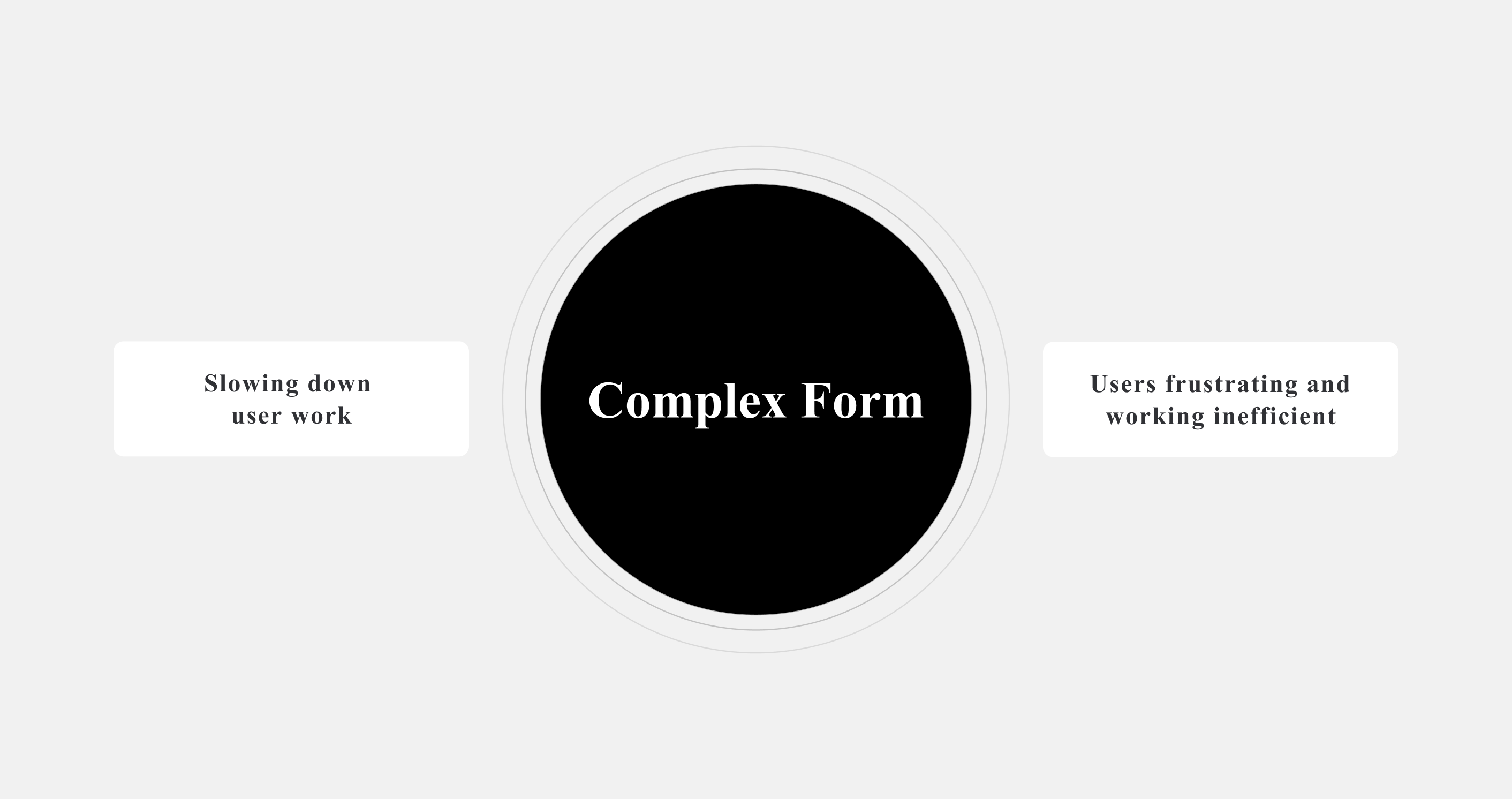
After years, our client realized their internal system was slowing users down instead of supporting them. Forms were cluttered, data was scattered, and navigating the system had become frustrating and inefficient
To address these problem, we learn how users interact, identifying user pain points, and restructuring the form experience to help users complete their tasks more easily and efficiently
Problem
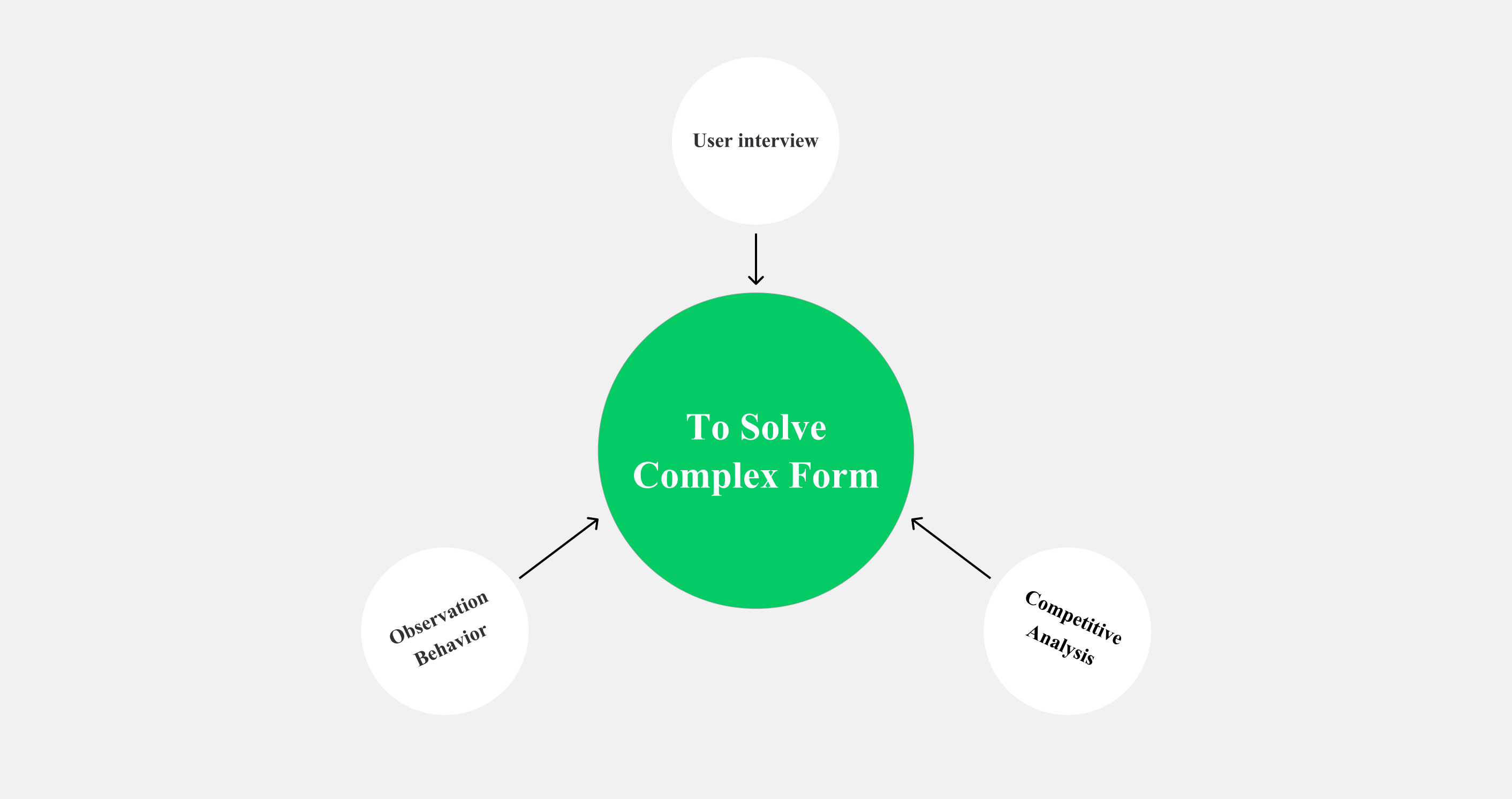
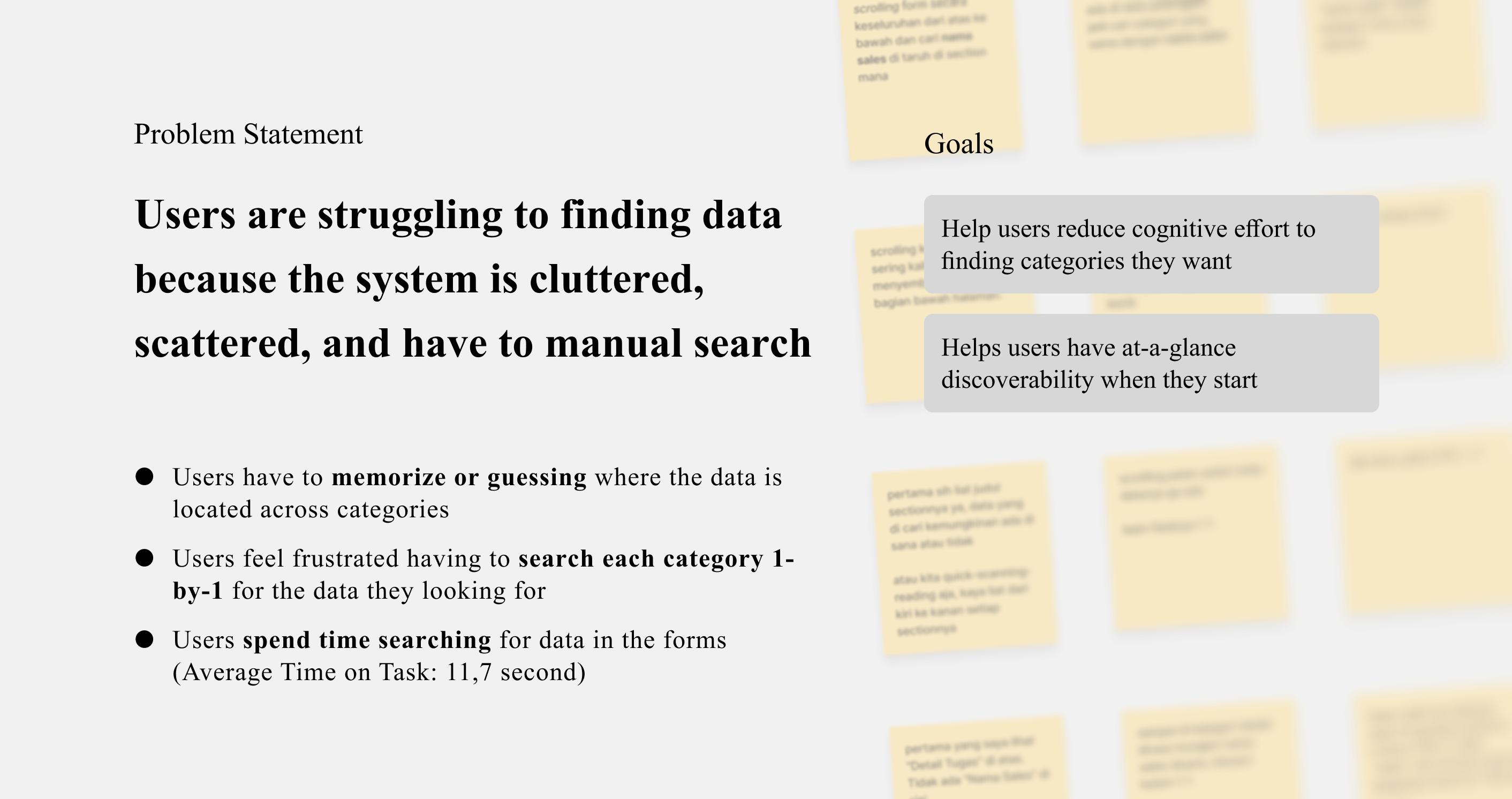
Their internal system was no longer supporting users effectively. The forms were difficult, dynamic, and complex that slowed down task completion so users overwhelming when used it, and lacked of flexibility to adapt to new business needs and exponential growth
Research Activity
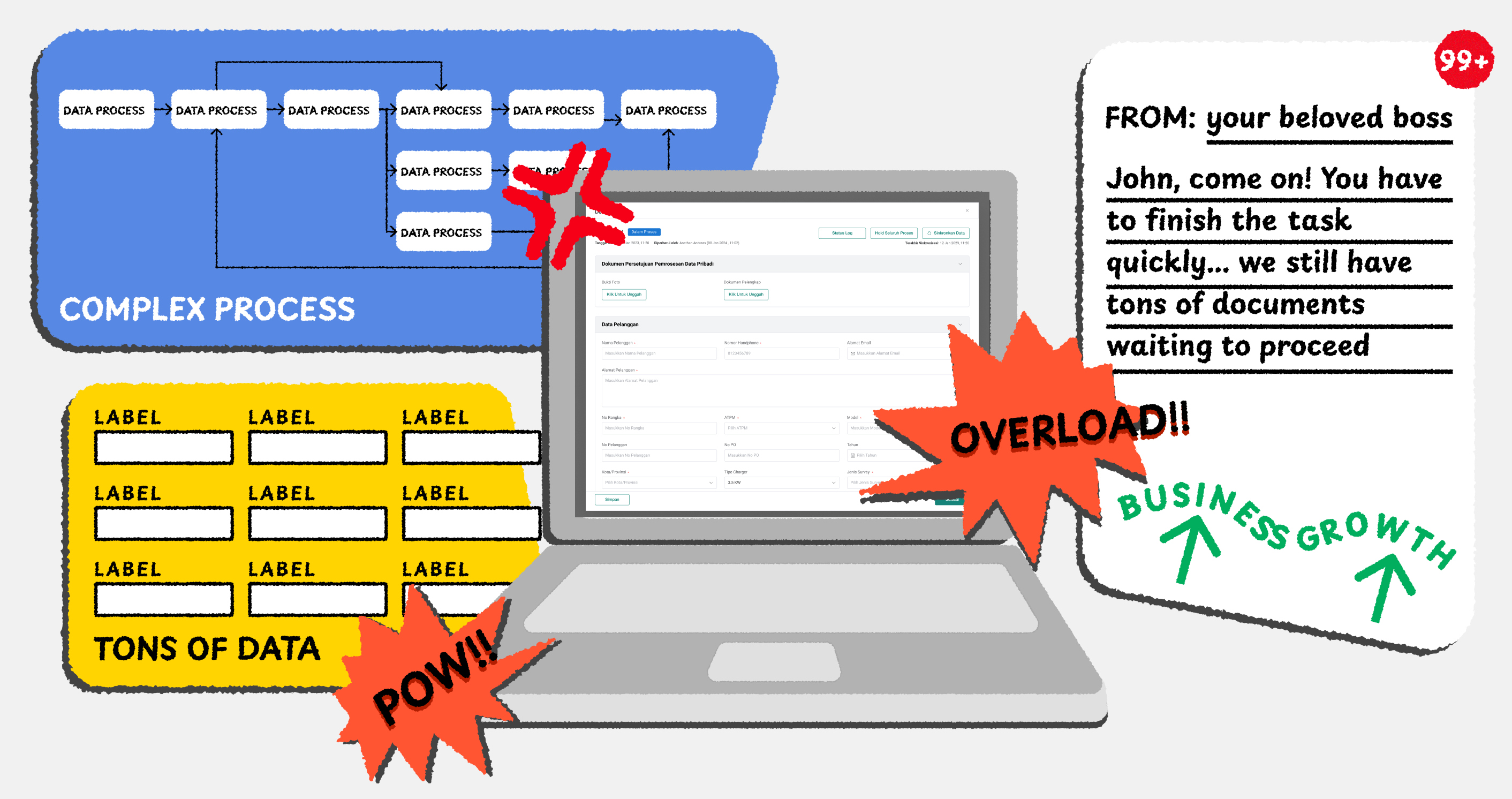
We gathered business process from Client and Product Lead, our team listed down key question understand how users interact with the current system, how they search data in the form, and how long it takes them to find what they need
We asked them questions before the task was given, we believed that answering these questions would be crucial to improve the form layout and structure. However, given a tight deadline, we conducted a quick — informal research without a structured research plan
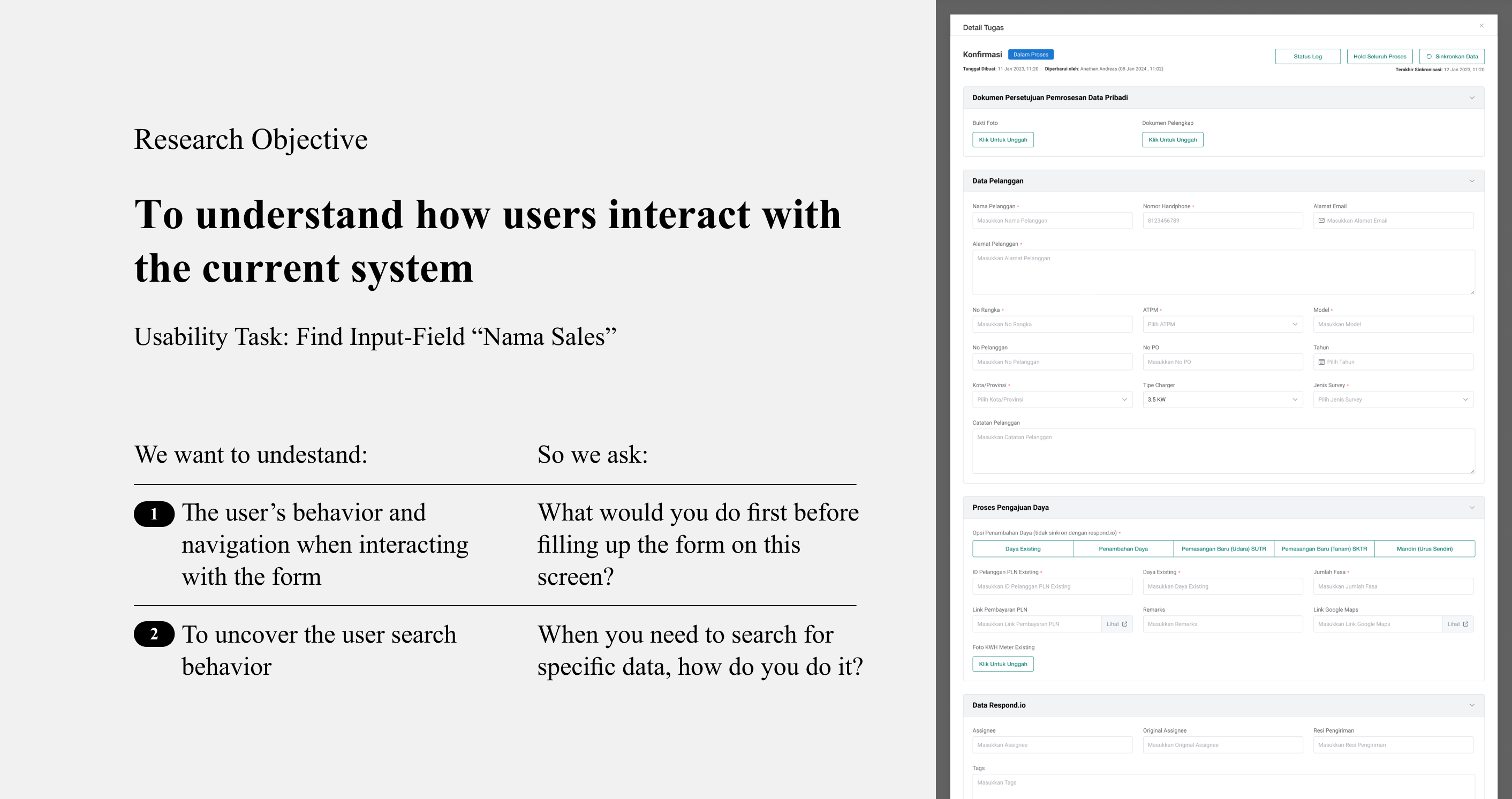
We invited 4 of our colleagues outside the team project and observed their behaviors when they finished the task we gave them and interacted with the system. We also asked them questions before and after regarding their actions
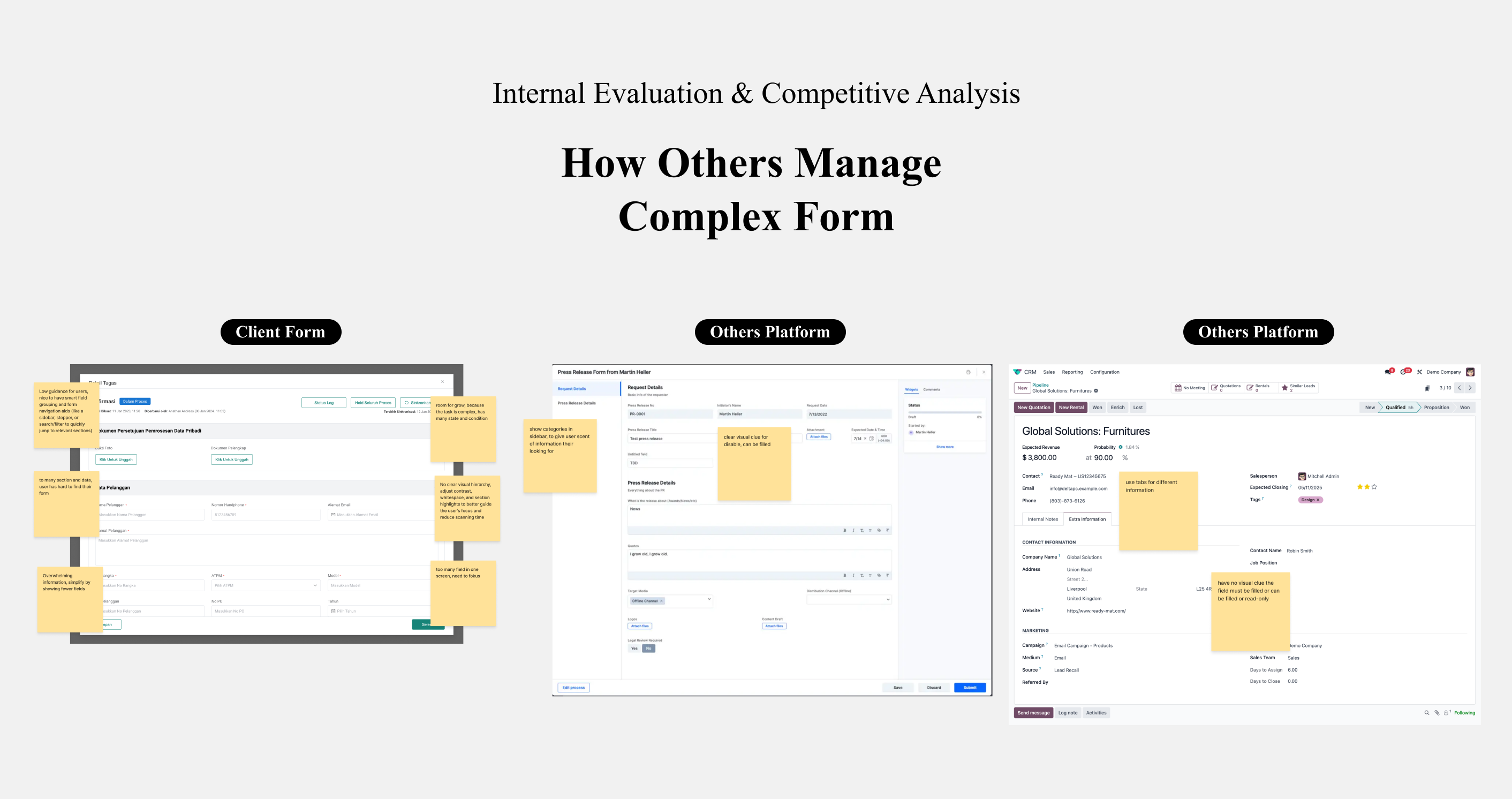
To be more accurate, we did a competitive analysis and evaluated how other CRM systems were structured to better understand how they handled complexity and better form layouts
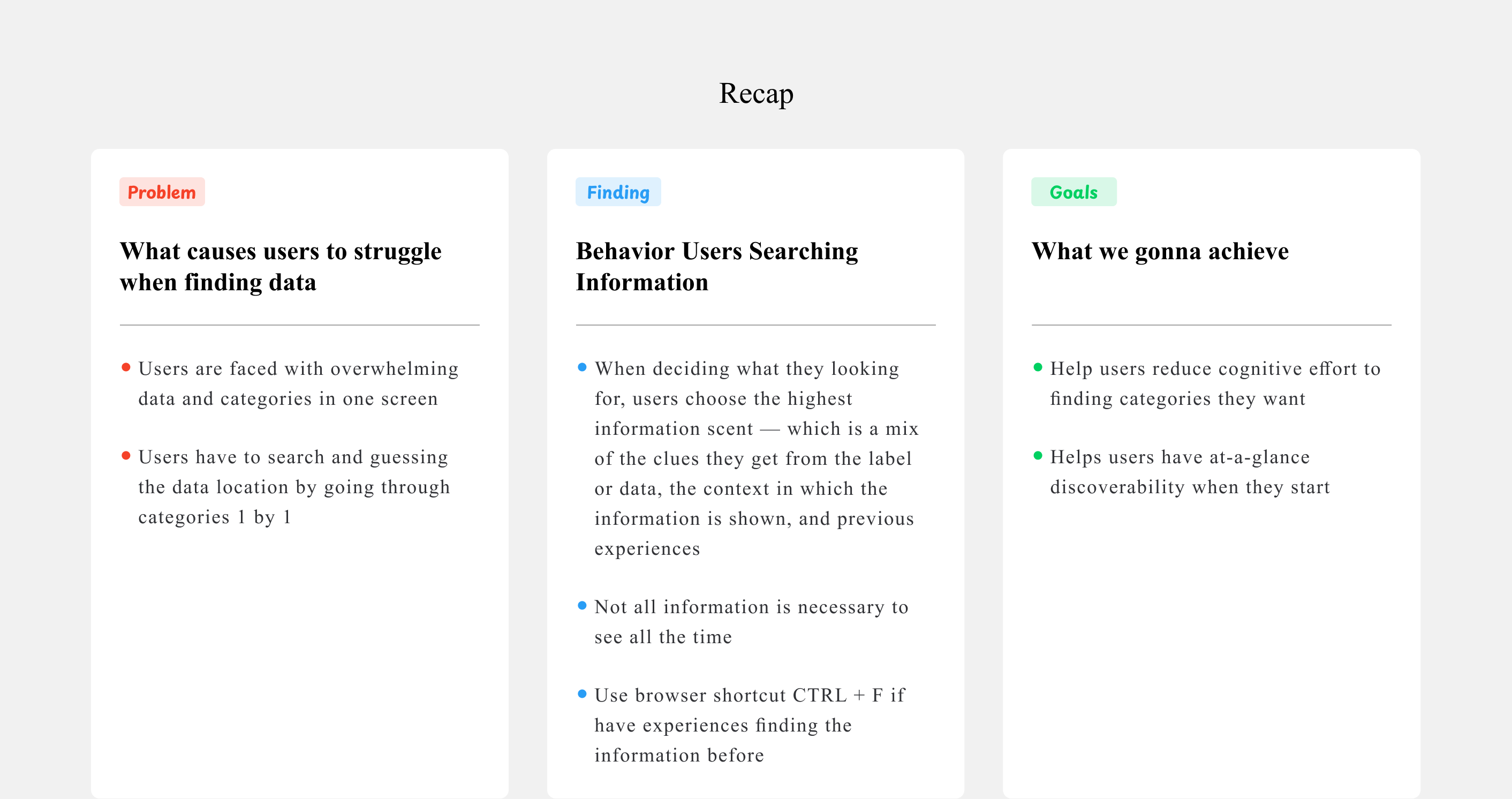
Users have to effort to find data causing manual searching, and guessing the data location. A intuitive structure is needed to reduce effort and ease of finding data location in the form
Experience Design
From the insight finding, We (Designer team) conducted an internal workshop for us to brainstorm layout pattern and structure of the form. The new structure must allow users to reduce cognitive effort when finding the categories they need and support at-a-glance discoverability when they start
From the results, after several iterations and validations with the Product Lead and Client, we finalized the design blueprint to guide the high-fidelity layout of the content and structure
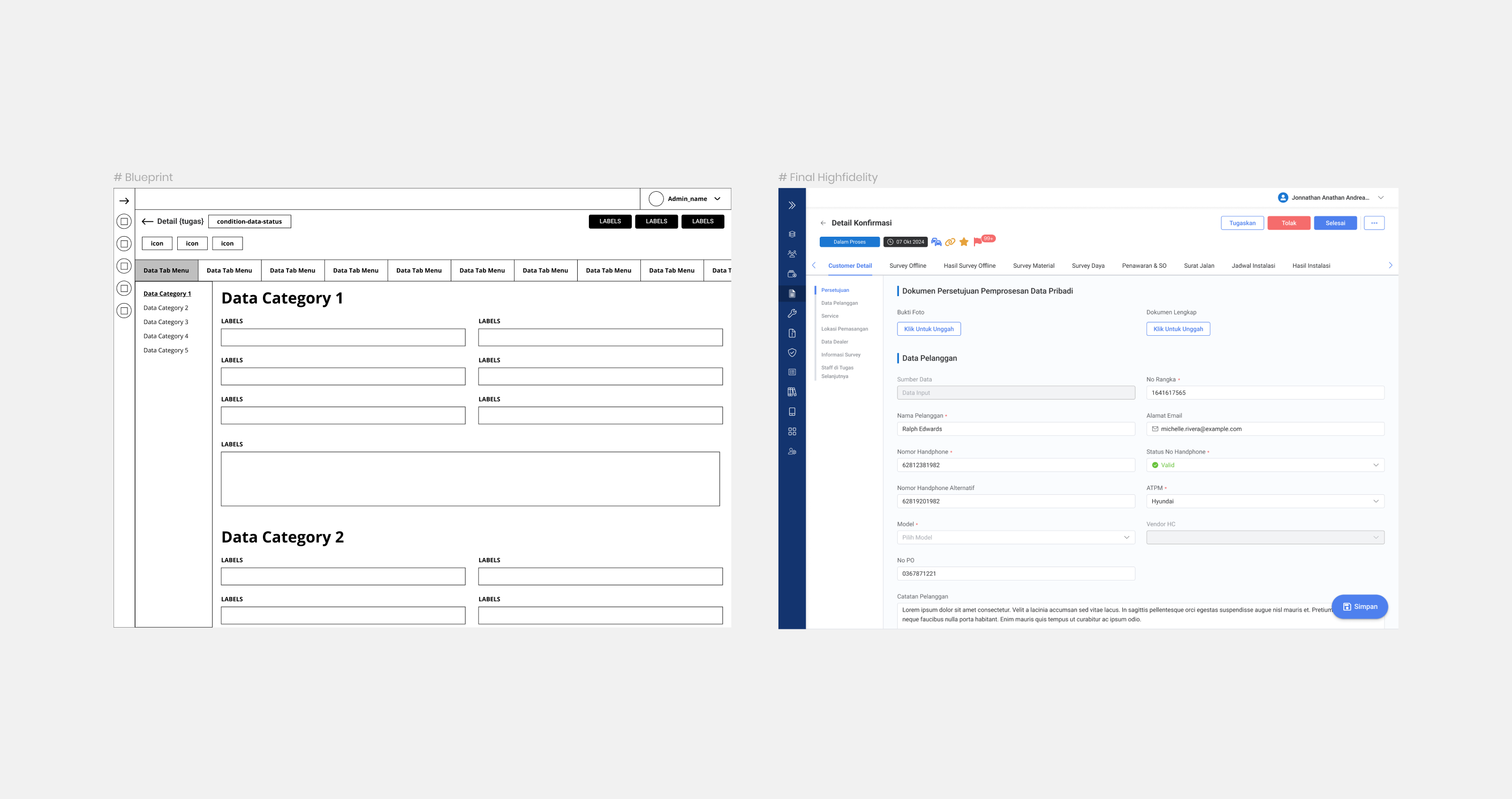
Design Outcome
We worked to restructure the form to be simpler and more user-friendly by organizing sections logically, using visual cues and formatting for clarity, grouping related content, and guiding users with clear navigation. We also considered best practices navigation
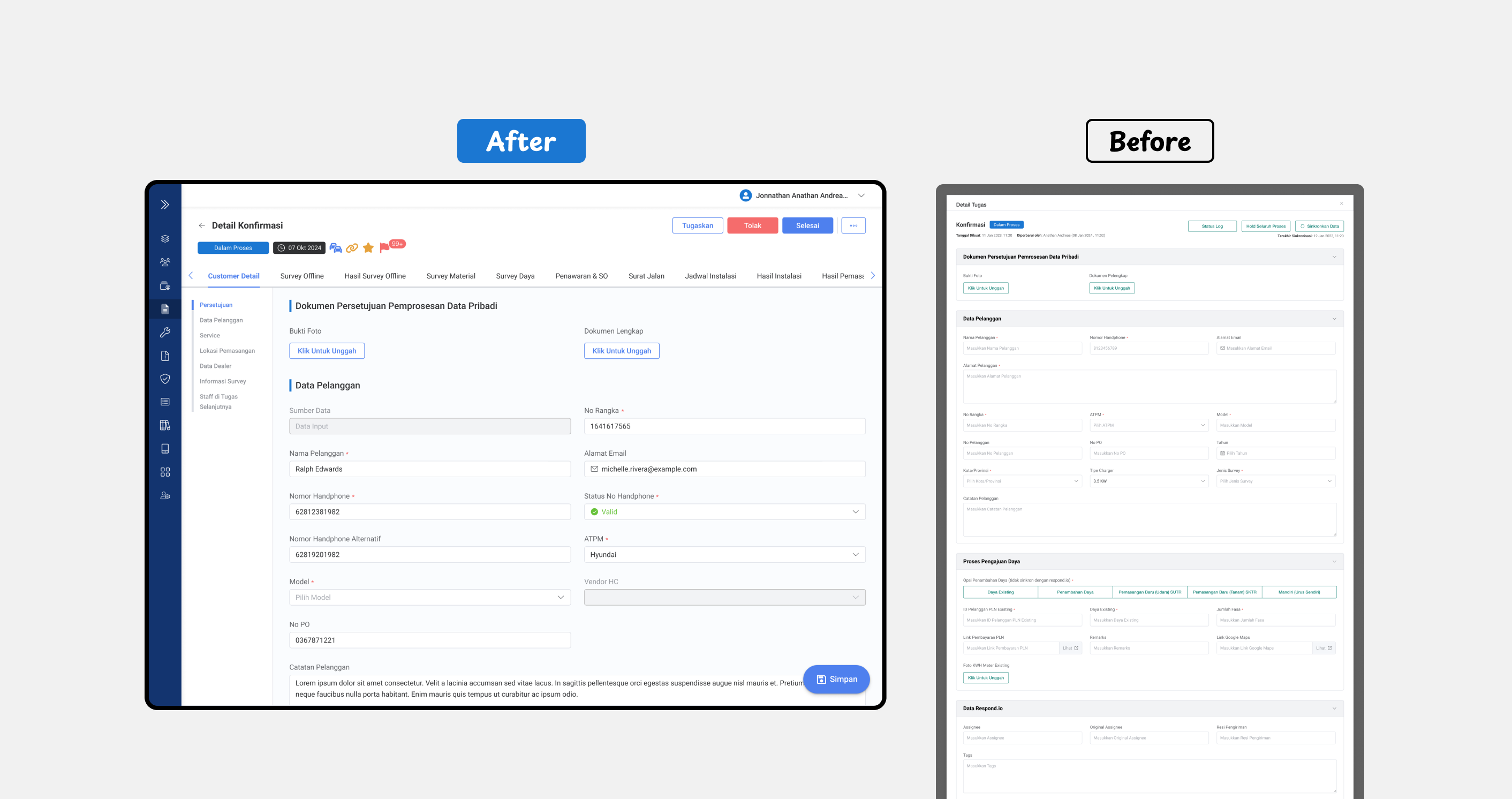
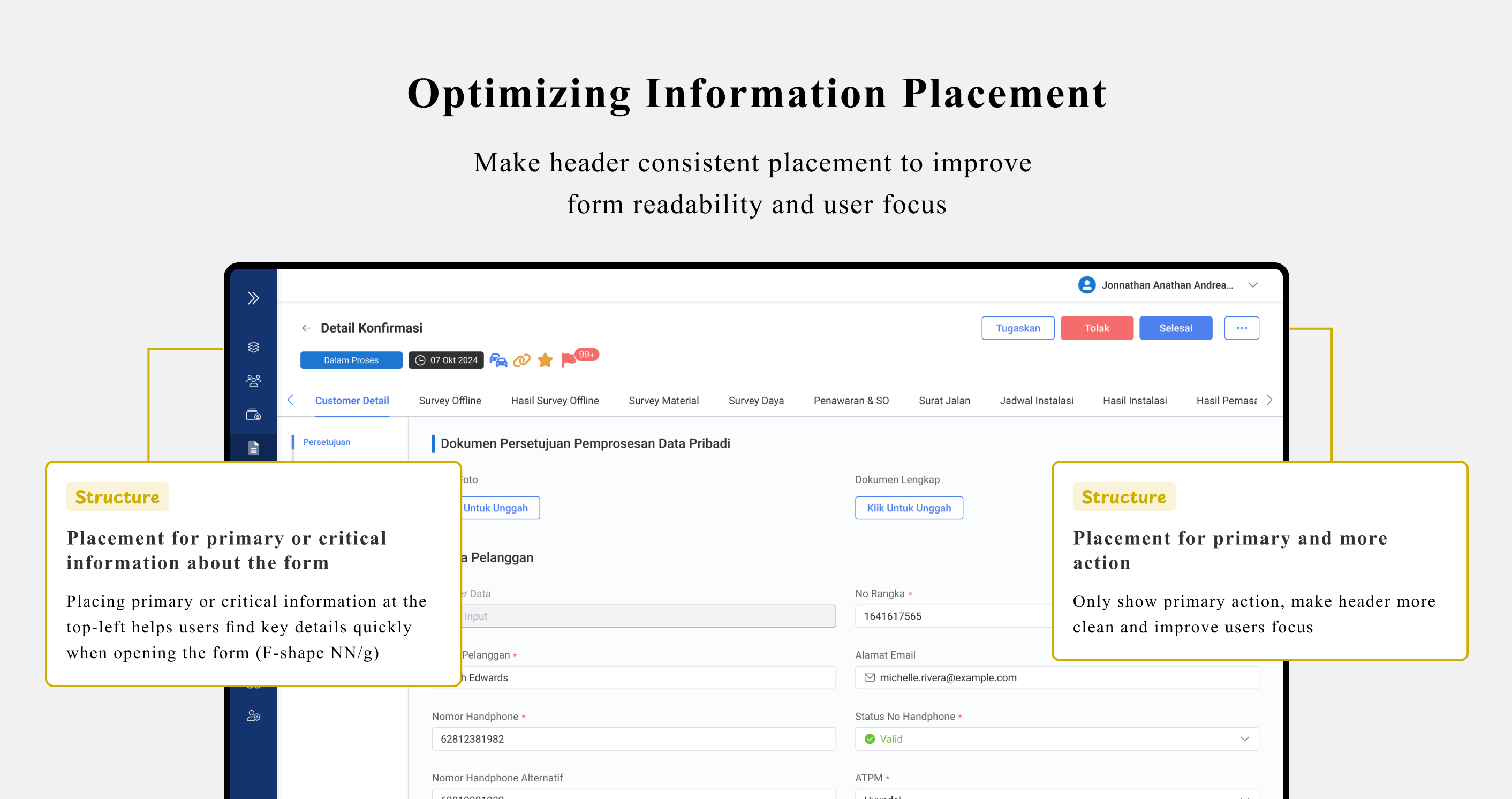
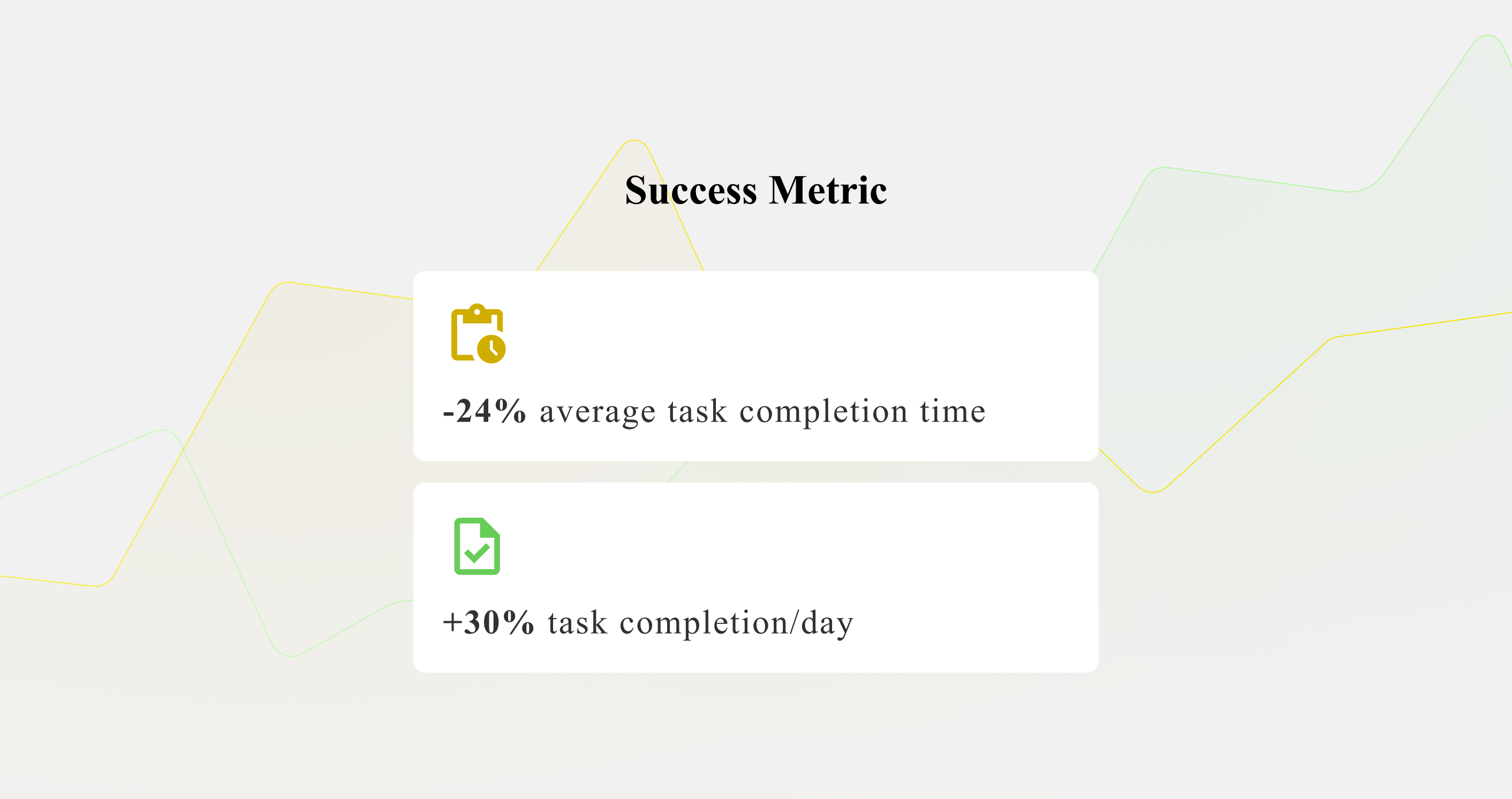
From report, we achieving user satisfaction and business goals. The new layout tool significantly improved process efficiency and positively impacted employees' daily experiences
Our efforts not only improved the overall process but also had a positive impact on employee's daily work
Key Takeaways & Reflection
Any kind of problems and obstacles that users experience during form filling can lead to lower completing speed and users satisfaction. In the worst case, users may not be able to complete task
Accordingly, everyone working creating form should pay special attention to improving their forms and making them usable as possible, designing form makes people job easier
We spotted common issues through simulations, but without real users, insights were limited. Research should involve the right users to uncover more problem